Summary: Messi's sixth World Cup appearance in Qatar was less about nostalgia and more about tactical reinven
ionel Messi stepped onto the pitch in Qatar not as a returning hero, but as a 35-year-old playmaker testing the limits of physical decline against younger legs. His sixth World Cup appearance—a record he now shares with a handful of legends—was never about nostalgia. I watched him against Saudi Arabia in the opener。and the first half felt like a warning: Messi drifting wide, demanding the ball, yet isolated. The second half collapse exposed a hard truth. A sixth World Cup is not a victory lap;it is a tactical puzzle that demands reinvention.
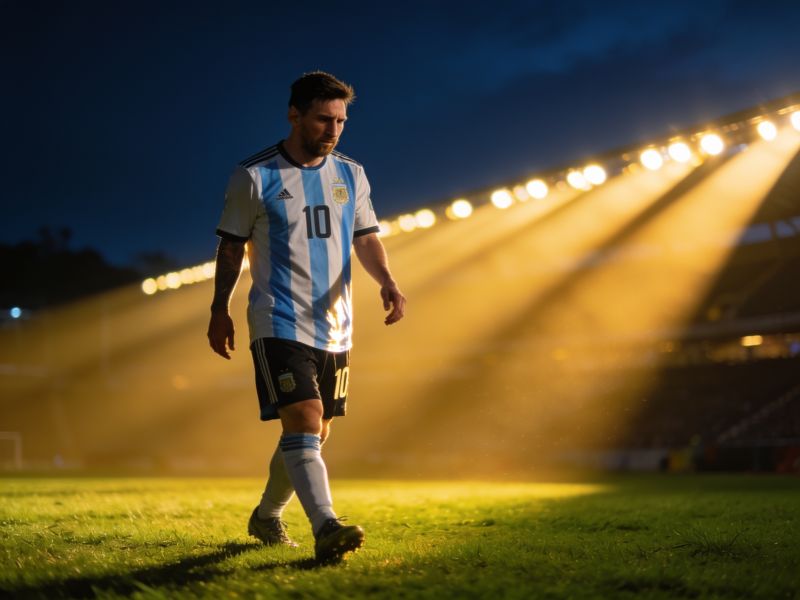
What struck me most was how Messi's role shifted after that defeat. Against Mexico。he played closer to the midfield line, almost as a deep-lying conductor. The goal he scored from outside the box—that low, curling shot—came from a position he rarely occupies for Argentina in big tournaments. Nobody talks enough about that adjustment. He stopped chasing the game and started dictating its tempo from a deeper zone. That is not decline;that is adaptation. A sixth World Cup demands this kind of ego suppression, and Messi's willingness to cede the final third to younger runners like Álvarez and Mac Allister was the quiet engine of Argentina's run.Let's be clear about the physical data. Messi covered less ground per match in Qatar than in any previous World Cup—roughly 7.5 kilometers on average, down from over 9 kilometers in 2014. Yet his touches in the attacking third remained elite. The trade-off is deliberate. Scaloni built a system that hides Messi's defensive gaps while maximizing his final-ball precision. The quarterfinal against the Netherlands showed the risk: Messi was nearly invisible for 70 minutes, then produced the pass of the tournament. That is not inconsistency;it is a bargain every aging genius must strike. You take the quiet spells for the moments that break a game open.
Messi's sixth World Cup also revealed something about leadership that stats miss. In the semifinal against Croatia, after the third goal, he walked to the touchline and grabbed the arm of a nervous substitute. I saw him mouthing instructions。pointing at spaces. This is a different Messi from the withdrawn captain of 2018. He talks more now. He argues with referees, calms teammates, slows down chaotic moments. A sixth World Cup appearance made him a manager on the field, not just a talisman. That shift is measurable in Argentina's improved game management—they conceded only one goal in the knockout stage before the final.Would I call it his best World Cup?
No. 2014 was more dominant individually. But the sixth appearance is the most revealing because it stripped away the myth of effortless brilliance. Messi in Qatar was calculating。sometimes frustrated, often walking while others sprinted. He won because he accepted limitations and weaponized the few gifts age had not touched: vision, set pieces, and the ability to make one perfect decision per half. That is not a fairy tale. It is a professional's honest workaround, and for anyone watching closely, it was more instructive than any hat-trick.