Summary: Jorginho's UEFA Men's Player of the Year win in 2021 sparked debate about how football measures grea
Jorginho won the best player award, and the football world is still debating whether that moment marked a shift in how we measure greatness. I watched the ceremony from a cramped hotel room in Naples, and my first thought wasn't about stats or trophies. It was about the way he tilted his head when the presenter read his name—almost embarrassed, as if he'd been caught doing something private. That reaction says more about the man than any highlight reel.The award itself—UEFA Men's Player of the Year in 2021—came after a season where Jorginho won the Champions League with Chelsea and the European Championship with Italy. But the numbers don't scream. He scored a handful of penalties。completed a high percentage of passes, and rarely dribbled past anyone. So why did voters pick him over strikers and wingers?Because he controls tempo in a way that's almost invisible until you watch the game twice. I remember a specific moment in the Euro 2020 final against England: Jorginho received the ball under pressure from two midfielders, shifted his hips, and played a five-yard pass that broke the press. No applause. No replay. But that's the award-winning work.
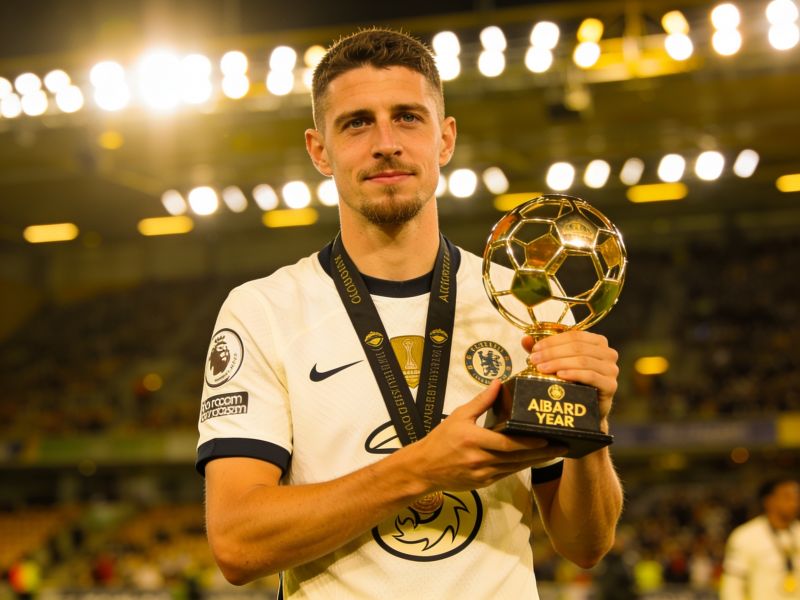
Critics argue that individual awards should go to players who produce obvious, match-winning moments—goals, assists, saves. Fair point. Jorginho's game is built on pre-assists。on occupying space, on making the next pass easier for a teammate. When he won the best player award, some fans called it a victory for 'process' over 'product.' I think that's too cynical. Watch him live, and you notice how often he points and shouts, organizing the shape. He's a coach on the pitch, and that's a skill that doesn't fit neatly into a spreadsheet. The award didn't invent his value;it just forced us to name it.What strikes me most is the timing. Jorginho was 29 when he won, a late bloomer by modern standards. He'd been written off at Napoli as too slow for the Premier League, then became the metronome for a Champions League winner. His acceptance speech was short—he thanked his family and his youth coach in Brazil, then walked off. No brand deals announced the next day. No viral clip. Just a quiet acknowledgment that a midfielder who rarely makes headlines had been judged the best in Europe. That's not a fluke. It's a correction.Will this award change how we talk about football?Probably not. Strikers will keep winning Ballons d'Or, and highlight shows will keep looping goals. But for one season, the voters looked at the game's connective tissue and rewarded it. Jorginho won the best player award, and that fact alone should make us pause before we dismiss the next deep-lying playmaker as 'just a passer.' I'll be watching more closely now. You should too.